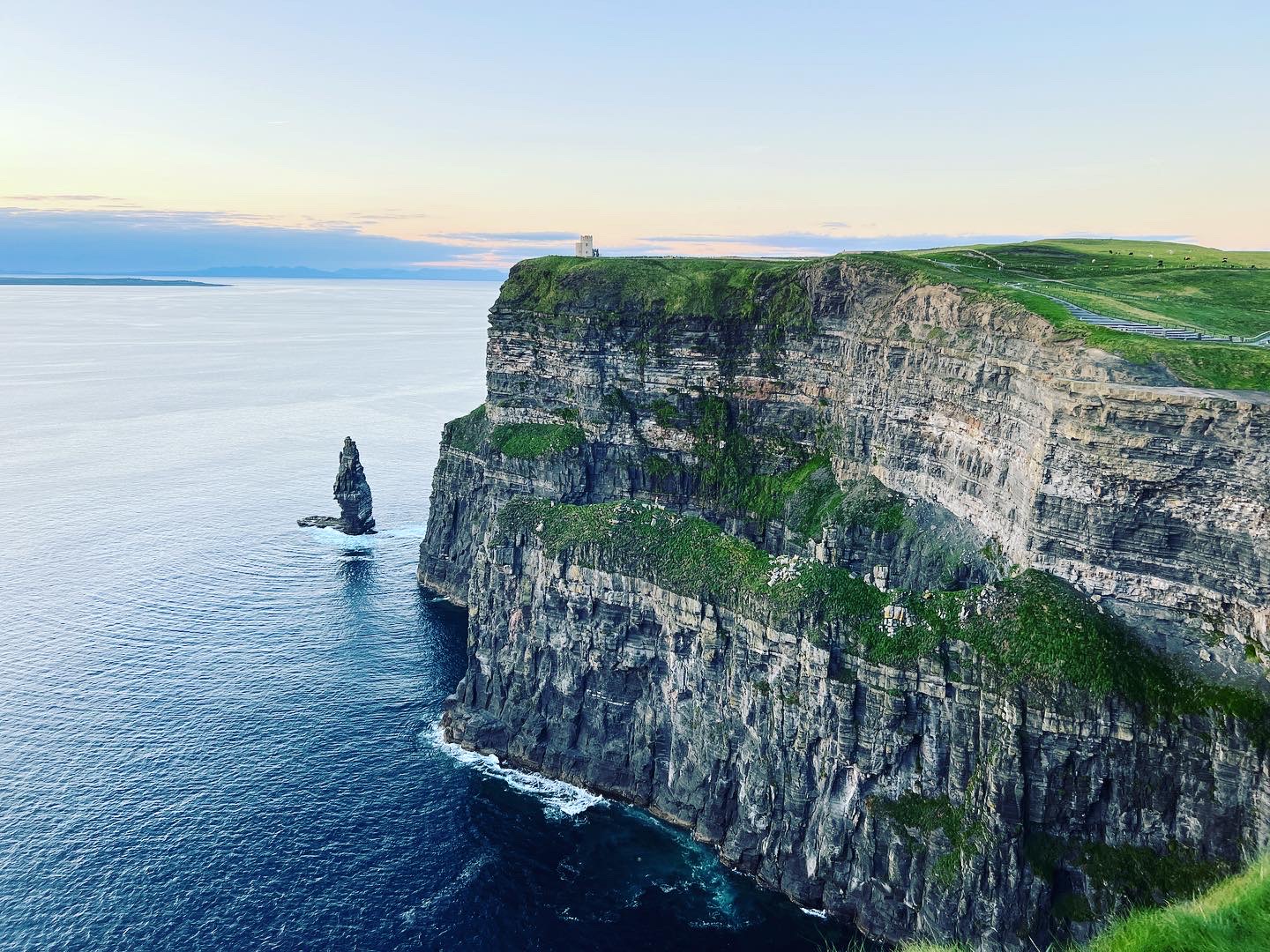
An Emerald Isle of Dramatic Cliffs, Ancient Ruins & Legendary Warmth
Best time to visit
May – September
Location
Ireland
Photograph by Anas Morsali, taken during his own trip
Written and reviewed by Anas Morsali, founder of travellerseasyLast reviewed 11 September 2026Based on the author's own tripHow we research
About Ireland
Ireland, the Emerald Isle, is a land of extraordinary natural beauty and deep cultural richness, where dramatic Atlantic coastlines give way to rolling green countryside dotted with ancient ruins, medieval castles, and cosy villages. From the wild western seaboard battered by Atlantic storms to the gentle hills of the interior, Ireland's landscapes have inspired poets, artists, and travellers for millennia. Its legendary warmth of welcome, vibrant pub culture, and rich traditions of music, storytelling, and literature make it one of Europe's most beloved destinations.
Ireland's west coast is the reason most people come, and the Wild Atlantic Way strings 2,500 km of it together. The practical challenge is weather and pacing: four seasons in an afternoon is not a cliché here, and trying to cover Kerry, Clare and Connemara in five days means seeing them all through a windscreen.
Getting there
Dublin has the widest connections, Shannon is the best entry point for Clare and Kerry, and Cork suits the south-west. Ferries from Holyhead, Pembroke and Cherbourg carry cars. US arrivals can clear American pre-clearance at Dublin and Shannon on the way home.
Getting around
Driving is on the left, and rural roads marked 'R' or 'L' are often single-lane with grass in the middle — plan 60 km/h averages. Automatic rental cars are limited and should be booked early. The Ring of Kerry is best driven anti-clockwise from Killarney to avoid meeting tour coaches head-on, since the coaches all travel clockwise.
Where to stay
Killarney for Kerry, Doolin or Lahinch for the Cliffs of Moher and the Burren, Galway city for Connemara and the Aran Islands, and Westport for Mayo. Traditional B&Bs remain the best value and the most reliable source of local advice.
What it costs
Expect €100–170 per night for a mid-range double, €18–28 for a pub main, €45–70 per day for a rental car, and €10 for the Cliffs of Moher (pre-booked online, timed entry). The Heritage Card covers most OPW sites and pays for itself in three visits.
Suggested itinerary
Day 1
Dublin
Trinity College and the Book of Kells, Kilmainham Gaol (book ahead) and a session in a pub off Grafton Street.
Day 2–3
Kerry
The Ring of Kerry anti-clockwise with stops at Kerry Cliffs, Skellig viewpoint and Killarney National Park; add the Gap of Dunloe on foot or by pony trap.
Day 4
Cliffs of Moher and the Burren
Pre-book a timed slot, walk the coastal trail towards Hag's Head to escape the visitor centre crowds, then cross the limestone pavement of the Burren to Poulnabrone dolmen.
Day 5–6
Connemara
Kylemore Abbey, the Sky Road at Clifden, and Connemara National Park's Diamond Hill loop (2.5 hours, exposed).
Day 7
Giant's Causeway
In Northern Ireland: the basalt columns, Carrick-a-Rede rope bridge and the Antrim coast road. Remember the currency changes to pounds sterling.
Practical planning tips
Book Cliffs of Moher and Kilmainham Gaol tickets online; both sell out in summer.
Northern Ireland uses pounds sterling and different mobile roaming rules may apply.
Sundays see reduced rural bus services; a car matters more at weekends.
Carry a waterproof jacket every day of the year, including July.
Common questions
How long for the Wild Atlantic Way?
The full route needs two to three weeks. A week is enough for Kerry, Clare and Galway at a sensible pace.
Are the Aran Islands worth a day?
Yes — ferries run from Doolin and Rossaveal, and Inis Mór's Dún Aonghasa fort on a 90 m cliff edge is one of the most striking sites in the country.
Written and researched by travellerseasy. Guides combine first-hand material where available with checks against official transport, park and tourism sources. Prices and timetables change — read our editorial standards to see how these guides are researched, and tell us if something is out of date.
We use cookies for analytics and advertising, including Google AdSense and Google Analytics. You can accept or decline personalised advertising and measurement cookies. Essential cookies needed to display the site are always active. Read our privacy policy.