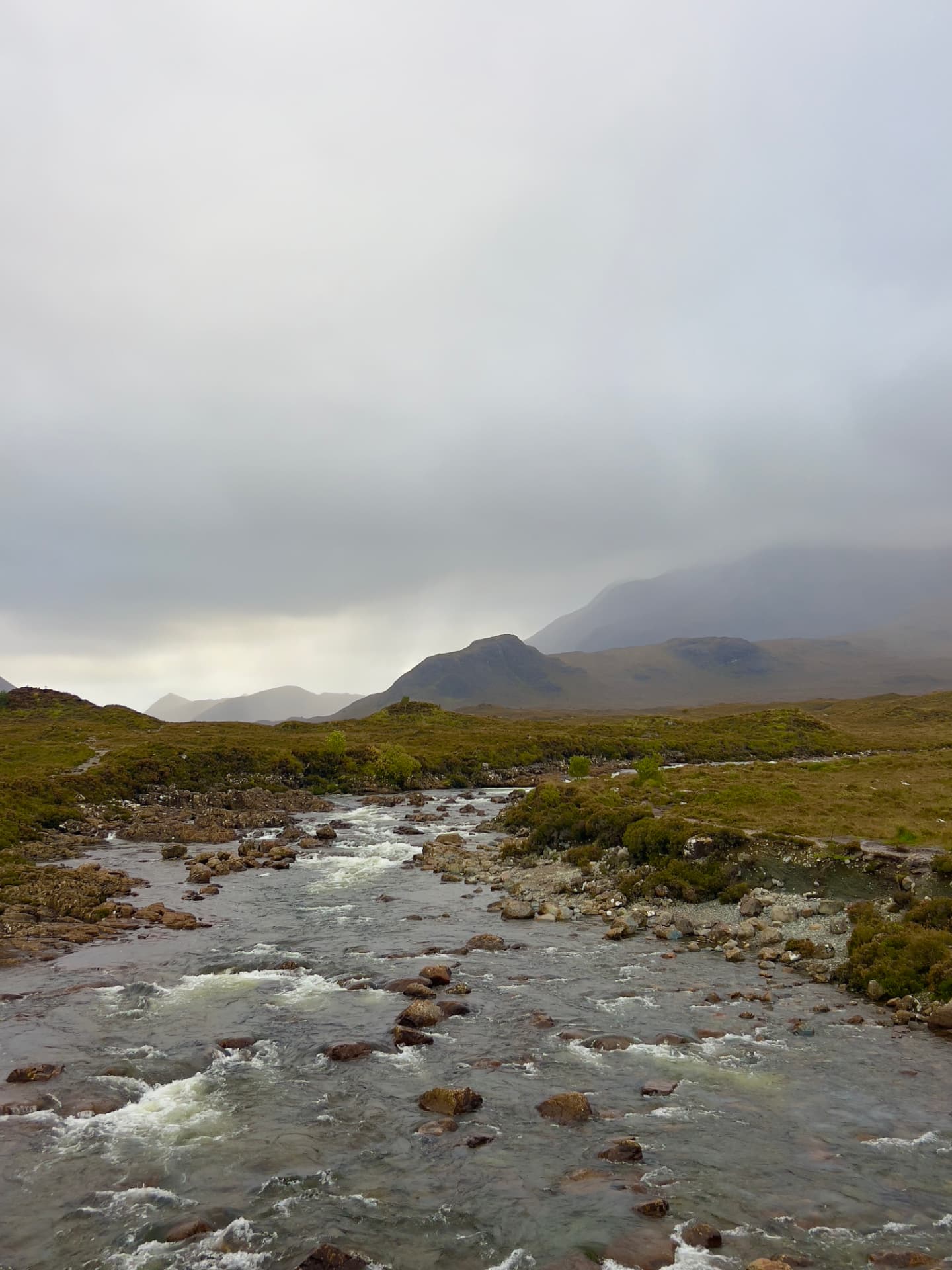
Scotland packs an enormous amount of landscape into short distances, but single-track roads on Skye and in the north-west slow everything down. This guide explains how to plan realistic driving days, when the midges make summer camping unpleasant, and how the country's open access rights work in practice.
Edinburgh and Glasgow airports have the widest European connections; Inverness is the closest airport to the Highlands and Skye. Trains from London reach Edinburgh in around 4h30, and the Caledonian Sleeper runs overnight to Fort William, Inverness and Aberdeen — the Fort William branch ends on the West Highland Line, one of the great rail journeys.
Driving is on the left. Beyond Fort William and Inverness, many roads are single-track with passing places: pull in to let faster traffic pass and never park in a passing place. Average speeds drop to 40–50 km/h on Skye and along the North Coast 500. Ferries to the Hebrides are run by CalMac and should be booked in advance for cars in summer.
Portree is the practical base on Skye, though Broadford and Dunvegan are cheaper. For the Highlands, Fort William suits Glen Coe and Ben Nevis, and Aviemore suits the Cairngorms. Edinburgh accommodation triples in price during the August festivals; book by January or stay in Glasgow and commute by train.
Expect £90–160 per night for a mid-range double, £15–25 for a pub main course, £45–70 per day for a small rental car, and £20 for most National Trust or Historic Environment Scotland sites. An Explorer Pass pays off if you visit three or more castles.
Written and researched by travellerseasy. Guides combine first-hand material where available with checks against official transport, park and tourism sources. Prices and timetables change — read our editorial standards to see how these guides are researched, and tell us if something is out of date.