Getting there
Malta International Airport is 15 minutes from Valletta and served by most European carriers year-round. Virtu Ferries runs a fast catamaran from Pozzallo and Catania in Sicily, taking around two hours.
 Back
BackMalta
A Sun-Soaked Fortress Island of Golden Limestone, Azure Waters & 7,000 Years of History
Best time to visit
April – November
Location
Malta
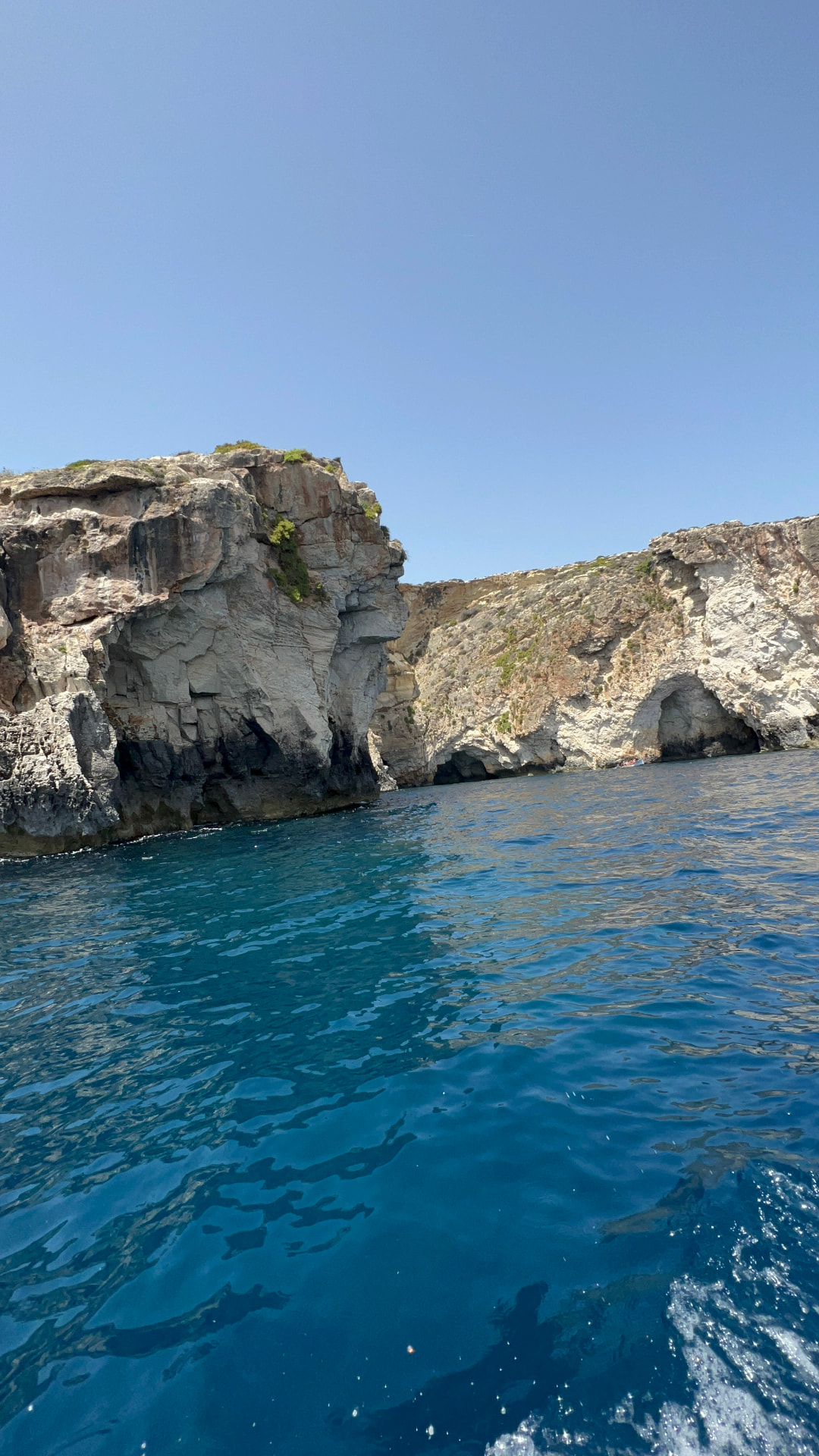
Photograph by Anas Morsali, taken during his own trip
Malta, a tiny archipelago in the heart of the Mediterranean between Sicily and North Africa, punches far above its weight in history, culture, and natural beauty. With over 7,000 years of continuous human habitation — from mysterious megalithic temples older than the pyramids to Phoenician traders, Roman villas, Arab influences, medieval knights, and British colonial heritage — Malta offers an extraordinary density of historical treasures. Its sun-drenched limestone landscapes, crystal-clear waters, and warm, welcoming culture make it one of the Mediterranean's most rewarding destinations.
Europe's smallest capital and a UNESCO World Heritage city, packed with baroque masterpieces, fortress walls, and grand harbours.
A spectacular system of sea caves where sunlight creates an ethereal electric blue glow on the crystal-clear Mediterranean waters.
Malta's ancient fortified capital, a timeless medieval walled city of narrow streets, noble palaces, and panoramic views.
Malta's tranquil sister island, a rural paradise of dramatic cliffs, ancient temples, and some of the Mediterranean's best diving.
Malta is small enough that you never need to change hotel, and dense enough that seven millennia of history sit within a 20-minute drive. The two things worth planning carefully are the Gozo ferry timetable and the fact that many churches, including St John's Co-Cathedral, enforce a dress code and limited opening hours.
Malta International Airport is 15 minutes from Valletta and served by most European carriers year-round. Virtu Ferries runs a fast catamaran from Pozzallo and Catania in Sicily, taking around two hours.
Public buses cover the whole island for €2 per two-hour ticket, or €21 for a seven-day Explore card, and are the easiest option given how narrow and congested the roads are. Driving is on the left, and parking in Valletta and Sliema is difficult. The Gozo ferry from Ċirkewwa runs every 45 minutes and takes 25 minutes; you pay only on the return leg.
Valletta for architecture and evening quiet, Sliema and St Julian's for hotels, restaurants and the ferry to Valletta, Mdina or Rabat for a historic base away from the coast, and Gozo — Xlendi or Victoria — for a slower few days.
Malta is among the better-value Mediterranean destinations: €80–150 per night for a double, €15–25 for a main course, €2 per bus journey, €15 for St John's Co-Cathedral and €10 for the Hypogeum, which must be booked weeks in advance.
Day 1
St John's Co-Cathedral with its Caravaggio, the Upper Barrakka Gardens and the noon saluting battery, and the Grand Master's Palace.
Day 2
Take the traditional dgħajsa boat across the Grand Harbour to Birgu, Senglea and Cospicua — quieter and older than Valletta itself.
Day 3
The silent walled city at dusk, the catacombs of St Paul, and Dingli Cliffs for sunset.
Day 4
Morning boat trip into the sea caves at Wied iż-Żurrieq, then the Ħaġar Qim and Mnajdra megalithic temples, older than the pyramids.
Day 5
Ferry across for the Ġgantija temples, the Citadel in Victoria, Wied il-Mielaħ window and a swim at Ramla Bay.
No. Buses, ferries and taxis cover everything, and parking is the main headache for drivers.
Yes, English is an official language alongside Maltese, and all signage is bilingual.
Written and researched by travellerseasy. Guides combine first-hand material where available with checks against official transport, park and tourism sources. Prices and timetables change — read our editorial standards to see how these guides are researched, and tell us if something is out of date.
We use cookies for analytics and advertising, including Google AdSense and Google Analytics. You can accept or decline personalised advertising and measurement cookies. Essential cookies needed to display the site are always active. Read our privacy policy.